
Ocean Warming
- Ecrin Alya AYDIN
- Mar 19
- 3 min read

Ocean warming is caused by the increase in greenhouse gases in the atmosphere, such as methane and carbon dioxide. The IPCC estimates that our oceans have absorbed 93% of the excess heat from greenhouse gas emissions since the 1970s. Well, the percentage is influential; ocean warming can affect marine life species in a variety of ways, including loss of habitat, and metabolic and reproductive changes.
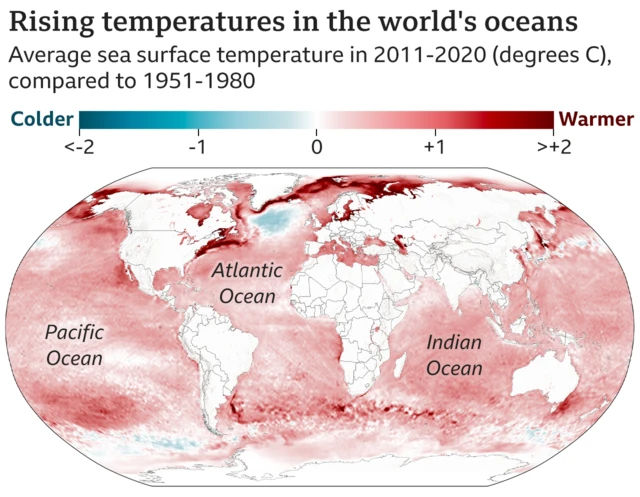
The amount of warming isn't uniform across the globe; some ocean areas have warmed more quickly than others, affecting marine life in different ways.
Effects of Ocean Warming
One of the first that comes to mind is rising sea levels from both melting the ice on land and, most effectively, the ocean water expansion. Thermal expansion of the ocean due to ocean warming causes the rise and displacement of coastal populations due to flooding.
Data from NASA's Argo profiling floats indicates that about 1/3 of sea level rise since 2004 is due to thermal expansion.
Reduction of the sea ice negatively impacts feeding patterns. High water temperature affects predator-prey relationships as prey migrate to cooler areas. Warming of the oceans affects the primary productivity of phytoplanktons, the basis of marine life.

There is competitivity in the oceans as well; the photosynthetic livings try to protect the areas
they can absorb light energy, but rising sea coastals may push some communities out of the photic zone. Shortly, when primary productivity is ruined, we can also say that the continuing web will be affected.
As the ocean warms, metabolic changes hit. Marine species may migrate, but they cannot locally escape to cooler areas; they are always surrounded by warmer water. This pushes organisms to their biological thermal limits and they become weakened or die. Organisms weakened by thermal stress don't reproduce well. Many marine reproductive patterns (mating, egg hatching, larval development time) are tied based on specific ocean temperatures; disruption of the temperature patterns leads to reproductive harm, risking the continuation of some marine species.
Coral Bleaching
Ocean warming is causing coral bleaching, which occurs when the loss of algae within corals causes them to bleach white. Some corals recover and some die. Coral and algae are in a mutualistic relationship; algae is the source of food and color for the corals.

Warming temperature stresses the corals. When stressed, corals expel their symbiotic algae which gives them a bleached appearance. Corals can recover from a bleaching event, but if the conditions that caused bleaching continue, this will often lead to the death of the coral.
Why does the color of the corals matter so much?
Coral colonies are the foundation of highly biodiverse reef ecosystems. The loss of the colonies means that there will be a loss of habitat and food for other species that depend on them. The loss will also disrupt the trophic structure of the reef ecosystem. Degraded reefs are vulnerable to invasive species which have the potential to create permanent negative ecosystem impacts.

In summary, increasing greenhouse gas emissions are the cause of ocean warming. Marine and coastal species are often negatively affected by ocean warming and subsequent sea level rise. Effects include loss of habitat, coral bleaching, metabolic and reproductive change harms.
To slow down ocean warming by reducing greenhouse gases, the Kyoto Protocol was signed in 1997. The Endangered Species Act and the Magnuson-Stevens Fishery Act are also some other attempts to minimize ocean warming.


